
What a Photograph Knows That Words Don’t
On story, silence, and the things a frame holds that language can only reach toward
Long before anyone wrote anything down, people shared their experiences through images — painted on cave walls, passed from one generation to the next. Those images explained who we are, where we came from, and what mattered to us.
Story remains one of the most powerful ways we create connection and meaning.
Story still works that way. And a photograph does something even the most carefully chosen words can’t quite do. It holds a moment in its entirety — light, texture, relationship, atmosphere — without having to explain any of it.
Words arrive one at a time. A photograph arrives all at once.
For travelers — whether you carry a camera or a notebook — this is worth pausing on. Because the story you are trying to tell, the feeling you are trying to communicate, often lives in exactly the kind of silence that images speak fluently. The mood of a backstreet at dawn. The weight of an empty chair. The way light falls across something worn and familiar. A photograph holds all of that without needing to explain it.
What I learned from architectural photography
For many years I worked in architectural and interior design photography — making images for designers, builders, and brands that had to communicate something specific. Not just show a room. Communicate it.
There was no room for vague. Every frame had to answer one question: what is this image about?
That question never left me. It became the foundation of how I teach. And honestly, it’s the same question a travel writer asks before setting a scene, or a traveler asks — even without realizing it — when something in a place makes them stop and reach for their camera.
“The camera records what you point it at. The photograph reveals what you truly noticed.”
Two photographs. Same room. Very different stories.
Here’s a simple example — two images of the same interior space, made moments apart, same camera, same light.
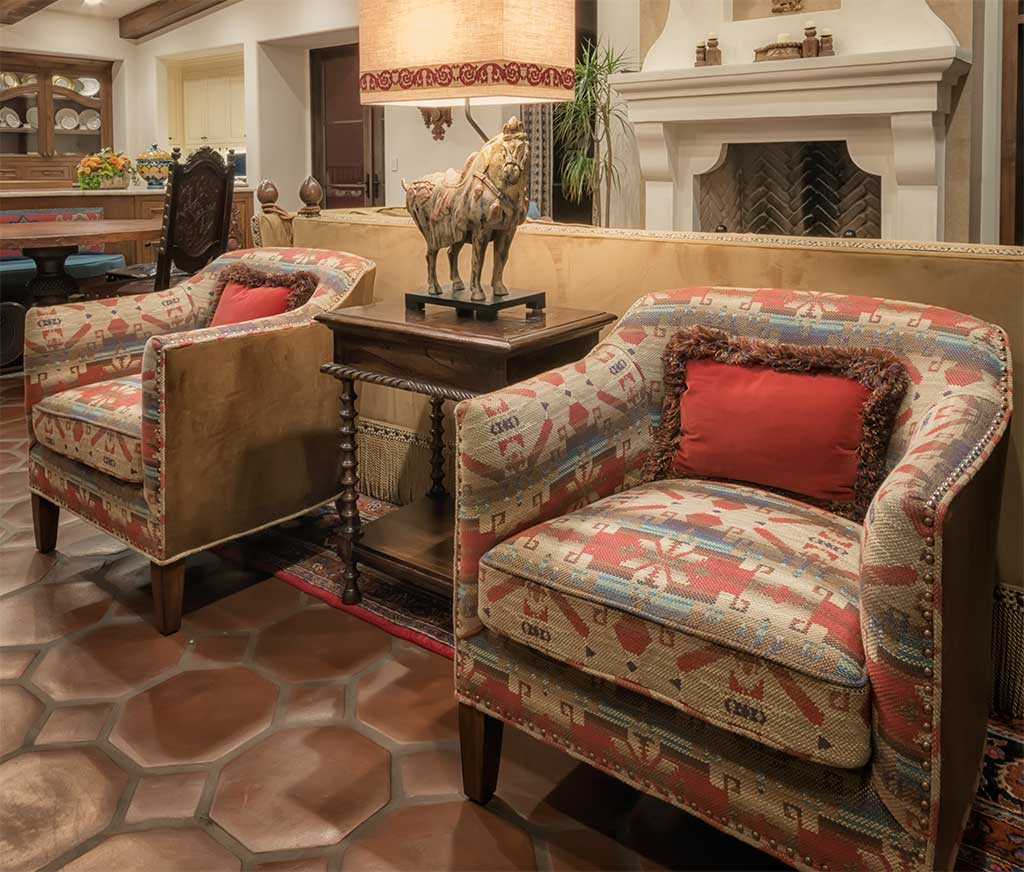
The lower angle image pulls you in. Your eye goes straight to the chair — the fabric, the light across it, the sense that someone placed it there with intention. It informs as if someone is standing next to you saying: look at this.
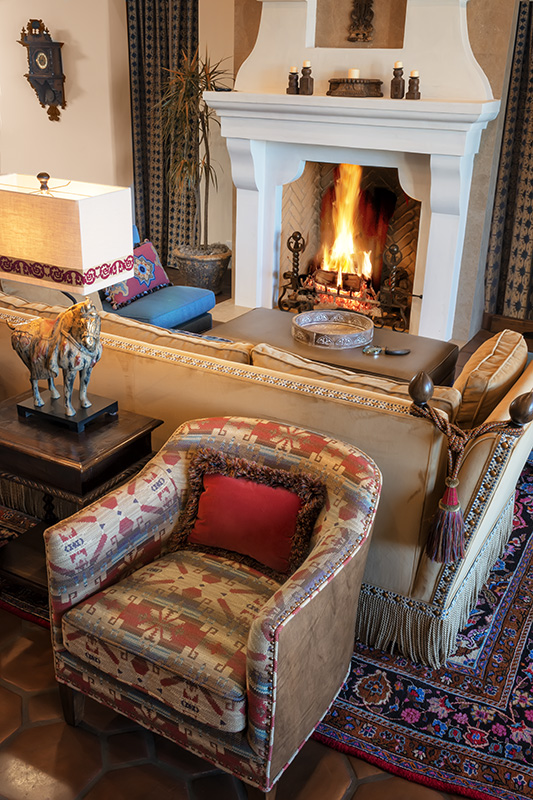
The wider image, taken with a higher angle shares more of the room. Notice how your eye moves from the fireplace to the furniture, perhaps to the horse back up to the clock on the wall and back around because they all feel equally important? Nothing is clearly chosen as the subject. There’s information, but not an intentional emphasis .
The closer image invites. The wider image explains. Both have their place.
That difference shows up everywhere. In how you frame a market stall. How you photograph a doorway at the end of a narrow street. How a writer decides which single detail of a meal deserves its own sentence instead of a summary.
Choosing where to place your attention — and what to leave out of the frame — that choice is the story.
What draws your eye is already the photograph
Most of us work in reaction. Something catches our attention and we respond — shutter, sentence, snapshot. The result is a record of the moment. Which is fine. But it’s not quite the same as an image that communicates something felt.
The shift is small, but it changes everything. It’s just one question, asked before you raise the camera: what is this actually a picture of?
Not what’s in front of you. But what, among everything in front of you, matters right now?
That question slows you down just enough. It moves you from reacting to noticing. And in that small space, something more intentional happens.
Two people can stand in the same light and find completely different photographs. What they find reveals what they noticed. And what they noticed is theirs alone.
Story isn’t something you add later
Whether you’re traveling with a camera or a notebook — or both — story isn’t decoration. It’s what you’re actually looking for before the shutter or the first word.
The photograph that stays with people is often the one that makes them see something specific.
A quiet statement from the photographer:
This is what I want you to notice.
The one that started with a moment of real noticing. That kind of seeing can be learned. And it starts much earlier than the shutter.If you’d like to begin practicing this way of seeing, the Start by Seeing Field Companion is a free introduction — designed to be used anywhere, in any place that draws your attention.