

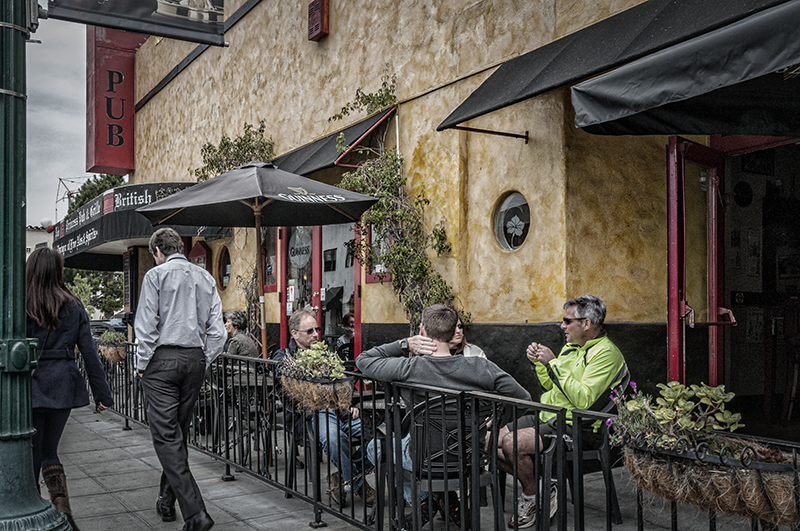
Training Your Eye — The Practice That Happens Before the Camera

There is a skill that most photography instruction skips entirely.
It has nothing to do with settings, composition rules, or equipment.
It begins much earlier — in the way you move through the world when you’re not photographing anything at all.
Seeing is something you can practice.
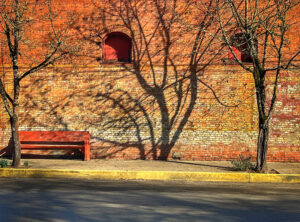
Not just in front of a subject, not just when you have a camera in hand — but in the ordinary moments of a day. The way light falls across a wall in the late afternoon. The relationship between two objects on a table. The way a shadow creates a line that wasn’t there an hour ago.
These are not photographic subjects. They are exercises in attention.
And the more you practice noticing them, the more naturally you begin to see them when it matters — when you’re standing in a place worth photographing, with a camera in hand and a moment that won’t last.
What Training Your Eye Actually Looks Like
It doesn’t require a camera. It doesn’t require travel.
It begins with a simple question you can ask anywhere:
What is already happening here?
Not what should I photograph. Not what would make a good image. Just — what is already here, before I decide anything?
Light moving across a surface. A line created by shadow. Two shapes that almost touch. A detail that seems out of place.
When you begin asking that question consistently — on a walk, in a café, waiting somewhere — your eye starts to work differently. You begin to see before you decide. And that gap between seeing and deciding is exactly where intentional photography lives.
There’s another dimension to this practice that’s easy to overlook.
The images you spend time with — the photographs you study, the work you return to, the visual experiences you seek out — shape the way you see.
Not by giving you things to copy. But by expanding your sense of what’s possible.
When you spend time with photographs that move you, you begin to understand — even if you can’t articulate it — what they’re doing. How the light is falling. What was included and what was left out. Where the eye is led and why.
That understanding settles in quietly. And it begins to inform your own work.
Begin with images that feel meaningful to you. Notice what draws you in. Pay attention to the colors, the tonal quality, the sense of space.
Ask yourself — not how do I replicate this — but what am I responding to here?
That question is more valuable than any technique.
Your visual choices shape that experience.
Consistency Comes From Clarity
Over time, as you practice this kind of attention, something begins to emerge.
A way of seeing that is recognizably yours.
Not a style in the superficial sense — not a filter or a treatment — but a genuine visual sensibility. The subjects that consistently draw your eye. The quality of light you’re most responsive to. The kind of moment you instinctively want to hold onto.
This is what gives a body of work its coherence. Not consistency of editing, but consistency of seeing.
And it begins not with the camera — but with the practice of noticing.
This same awareness applies when composing a photograph.
What you include, what you exclude, and how visual elements relate to one another determines whether the image feels calm, energetic, intimate, or expansive.
Strong compositions reveal relationships between light, shape, and space.
Training your eye helps you recognize these relationships before you press the shutter.
This is the foundation of the Intentional Image Method™ — and it’s where the Start by Seeing Field Companion begins. If you’d like a simple guide to practicing this way of seeing, it’s free and designed to be used anywhere.



Leave a Reply
Your email is safe with us.