
On the people who walked with me — and what they taught me about seeing
I want to tell you what I was really watching on our walks together.
Yes, I was watching the light. I always am. But I was also watching you — the moment something shifted. The exhale. The quiet focus that replaced whatever you’d arrived with that morning.
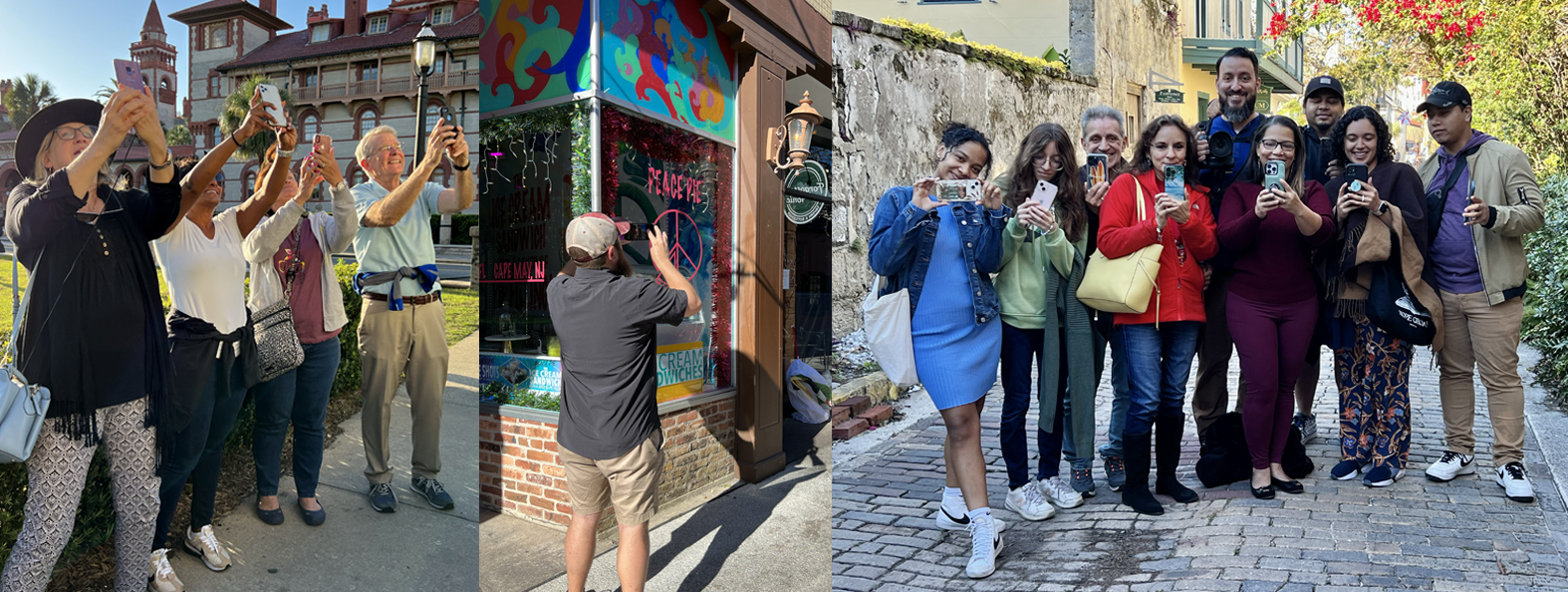
People would arrive a little rushed, phone already in hand, excited to learn something about their camera. By the end of two hours, something had changed. The pace had changed. The eyes had changed. I’d see someone stop mid-street, completely still, looking at the way shadow fell across a courtyard wall — and I’d know. They had started to see.
That’s when two hours would run out.
Every time.
“What I was really teaching wasn’t photography — or how to use a camera, though that was included. It was a way of returning to yourself.”
I’ve walked these streets hundreds of times. The light on the Cathedral facade at morning. The shadows moving through the old Spanish Loggia gates. The waterfront at that particular hour when the world seems to hold its breath. I never tire of it — because Saint Augustine rewards the person who slows down. It has always been generous to those who are willing to look.
But it was my guests who showed me what was really happening on those walks.
A mother came one morning with her teenage daughter — a girl who had been grappling with struggles, lost in the labyrinth of youthful uncertainty, resisting my direction. I was unaware of this at the time. I merely sensed that by the end of our morning together, it was the mother who had found a different form of quietude. Not an understanding of mechanics, but openness, presence, and engagement. She wrote to me afterward, expressing her gratitude — and in her own words:
“I feel I have been lifted to embrace my own creativity. My illness and responsibilities as a mother have been all-consuming. I now feel reconnected with a part of myself that has been lost.“— A guest, Saint Augustine
I’ve thought about that letter many times since.
I’ve walked with people who had quietly given up on photography — set it aside and decided that maybe it just wasn’t for them. And watched that change. Not because I taught them a setting or a technique, but because I encouraged them to trust the way they see. To stop apologizing for their point of view and start following it.
I’ve seen the exact moment when someone realizes they’ve made something beautiful. Not a snapshot — an image. Their face changes when it happens. There is no other word for it but joy.
“Photography has been my lifeline. It has brought me back to myself more times than I can count. That is not separate from what I teach — it is what I teach.”
I came to Saint Augustine the way many people come here — called by something I couldn’t quite name. I had just lost my mother, and I needed beauty, purpose, and a place that would ask something of me. I drove across the country alone with an idea and arrived knowing this was where the next chapter would begin.
Saint Augustine asked a great deal. It asked me to earn the right to tell its story — I sat for the history guide exam more than once before I passed. It asked me to build something that didn’t exist yet, in a city that wasn’t quite sure what to make of a photographer who also wanted to teach. And it gave me hundreds of mornings with people who were searching for something — sometimes light, sometimes history, sometimes themselves.
Out of all of those mornings, a method took shape. A way of thinking before you ever pick up a camera. A practice of slowing down, of noticing what draws you, of making images with intention and emotion rather than habit. I call it the Intentional Image Method™ — but really, it is simply the way I have always worked, formalized for the people I wanted to help.
And every single time — without exception — when two hours came to an end, people felt they had experienced only the beginning of something they wanted more of.
Two hours was never enough to share it fully. It never will be.
So I built more.
Everything I know — everything those walks taught me — lives now in a place you can return to, revisit, and go as deep as you want. The method is there. The thinking behind it is there. And so is the invitation to slow down and truly see, wherever you happen to be.
Some of you walked these streets with me. You were there when this took shape. I hope you’ll come find the rest of it.
Ready to begin?
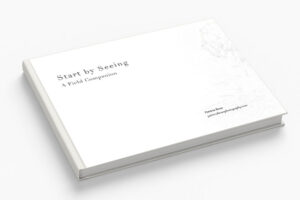
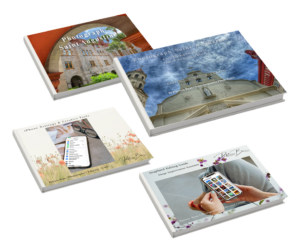
I’ve put together a Field Companion — a quiet introduction to the way I see and work. It’s the same process behind everything I teach, and the best place to start.
Start by Seeing — Explore the Field Companion