

There is a particular kind of seeing that has nothing to do with your camera settings, your lens choice, or the quality of light at that moment. It happens before any of that.
Sometimes it arrives unexpectedly — your eye recognizes something worth stopping for.
And sometimes seeing requires you to keep going. Past the obvious shot. Past the first good frame. Deeper into a place than most people bother to walk.
Both are expressions of the same practice. Both begin in the same place — with a trained eye and a willingness to pay attention.
That’s what I call Explore. And it’s where everything begins.
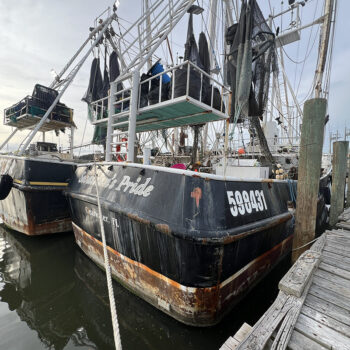

The harbor
This is the kind of scene you find when you wander past the tourist waterfront and into the working one. Most travelers walk past it entirely. The explorer stops — and then keeps going.
The wide shot was there and it was worth making. The boats, the rigging, the dock, the working atmosphere of the place — a thoughtfully composed image. I made that photograph.
And then I kept walking.
That’s what Explore asks of you. Not to dismiss what’s in front of you — but to stay curious. To keep asking what else is here. What am I not seeing yet.
That’s when the hull stopped me.
The rust bleeding through an orange stripe. A rope crossing the frame at an angle. Clearwater, FL — half worn away, still holding on. The water below catching the reflection of all of it.
That’s a working life written on steel.
That’s a different photograph entirely — and it was ten steps further down the dock.
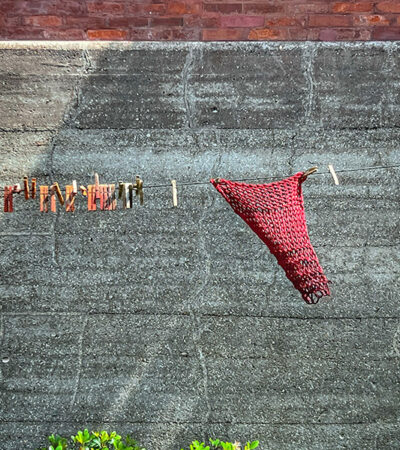
The line
I was walking past a stone wall when something registered before my mind did. Not a dramatic scene. Not a beautiful vista. A clothesline. Some weathered pins arranged in a quiet rhythm along the wire. And at the end — one piece of red knitting hanging at an angle, catching what little warmth the day had to offer.
Nothing was asking for attention.
And yet something made me stop.
When I looked at it — really looked — the principle became clear immediately. Simplicity. Not as a style or a filter or an aesthetic choice. As a fact of the scene itself. One thing. Everything else steps back.
The gray stone holds still. The pins mark a rhythm. And that single knitted piece does all the work simply by being the only thing that moves the eye.
The viewer never has to ask what this is a picture of. They just know. Like a sentence that needs no explanation.
That’s what simplicity looks like when it’s working. Not emptiness — knowing what to leave in. And letting everything else become the quiet that makes it visible.
The Intentional Image Method begins with a free resource — Start by Seeing: A Field Companion. It’s a portable introduction to the practice of seeing before you shoot.
Free Field Companion